Wednesday, 13 March 2013

Can my laptop alert me to emails?


A tablet could be the solution for a reader who wants a visible alert to new email.

 major plus of my now defunct Amstrad E-mailer was its warning light signalling the arrival of a message. A laptop can't tell me this, and because I only use it for emailing, this entails the inconvenience of switching it on each day to see whether any of the two or three messages I get in a month has arrived. Is there any way of utilising any of the five warning lights on my computer to alert me an email? John Goulding, by email Sadly not, though there are several gadgets that flash a light or change colour when a message has been received but the PC has to be on all the time and running email software. However, this is one of the things that tablet PCs and smartphones do really well. Most models can operate in a low power mode for several days, and sometimes a week or more between charges, and sound an audible alert or flash an LED when there is an incoming message. Tablets also boot up much faster than PCs, in some cases taking less than 30 seconds.

Google Analytics: if the EU turns nasty, it could cripple UK businesses


The search giant has a proud history of helping small businesses: with Gmail, Maps and Docs, it has helped make it easy, and free, for companies to step into the digital economy. At Mountain View last week, this took a new step forward with the release of Universal Analytics, which will allow firms to collect and analyse all digital business intelligence, from telephone calls to barcode scans, using their popular Google Analyticstool. Previously, users could only examine web data; now, they can stitch together all their users' activity, from several different devices and media, giving what is known in the trade as a "single customer view".
This will allow firms to deal far more easily with the tangled spaghetti-ball of information that the "big data" revolution has provided. But it's far from clear how the EU will see it, from a legal point of view.
Until last year, Google were told that their analytics product was illegal in Germany. There is still huge confusion over the application of the stringent EU web privacy legislation in different member states, something that Google say is the responsibility of the end user. Clancy Childs, the product manager for Google Analytics, was keen to stress at the launch that the tool will not be allowed to collect any personally identifiable information; usernames and customer IDs can be used, but if you use it to collect private data, such as email or home addresses, then you will have your data deleted. But whether that will satisfy the European bureaucrats is unclear.
Which is worrying, for both Google and businesses. More than half of the world's top million websites have already installed Google Analytics. The free-to-install platform has helped websites measure their marketing and content performance since Google acquired it in 2005, and by extending its functionality, Google are effectively challenging an business-software group that includes Oracle and IBM.
Of course, as with so many of Google's products, "free" has its limits: once you hit a certain level of usage, the data becomes sampled unless you invest in their Premium product. But this "freemium" model has worked well enough in the past that they confidently expect a large number of businesses to be signing up, because a user-friendly way of accessing big data will make a real difference to how companies operate.
But as I've written before, if the EU clamps down over privacy even where no personal information is revealed, it will cripple a booming sector of the British economy. Businesses everywhere will be watching closely to see whether Google's Universal Analytics can jump through their hoops.

Facebook is targeting abortion ads at young British women. Whatever your views, this is pretty crass


Many British women were startled when they woke up on New Year's Day to find their Facebook profiles had started advertising abortion providers to them. The ad in question, from American Abortion advisory website abortion.com, simply said: "Find An Abortion Provider Near You", as well as a US Freephone number. A click led to a mostly US-focused website, which lists a huge number of abortion providers throughout the US and just one provider in the UK, "Abortion support Network".
Some women targeted by the ad reacted with humour – one quipped to me: "Well, at least Facebook is also offering me wedding dresses at the same time, so it's giving me options." However, many who received the ad started to second-guess their lifestyle choices. What were they doing that made Facebook think they were in the market for a termination? Was it their lifestyle? Was something in their pictures or their statuses that flipped a switch that made an algorithm assume they were pregnant?
Now, I've got no problem with abortion providers advertising per se; but I'd still pay good money to find out exactly what search terms or keywords the abortion.com ad is looking for (sadly, they refused to comment for this piece when asked). When asked, Facebook declined to offer any information on the specific keywords, and issued a bullish statement about abortion advertising. A spokesperson told me: "Advertising of Post-Conception Advice Services (PCAS) is permitted under Facebook's rules, just as it is in print and broadcast media in the UK. Unlike other media, if people don't like an advert they see on Facebook they are able to dismiss it by clicking 'X' on the corner of the ad."
It's true that such advertisements are allowed on both print and broadcast media. Guidelines are laid down by the Committee of Advertising Practice. Indeed, Facebook are right that people who see such adverts on Facebook are able to dismiss the ads by clicking the X button and can even specify the reason that they no longer wish to see the advert; the options include "Against my views". There's also an option to hide a specific ad, or all adverts from that particular company.
Is that good enough? There's a key difference. If you see this advert on the tube, on a billboard, or hear it on the radio, it's not personal to you; it's not coming at you in what is supposed to be a personal and safe space. In contrast, plenty of people would be seriously upset by this Facebook ad; it's a safe bet to imagine women who have had abortions don't want to be reminded of it when logging on to share a picture or update a status. That's even leaving aside anyone who is pro-life, or deeply religious, people's parents or boyfriends seeing it and jumping to the wrong conclusions, that sort of thing. I also wonder just how many British women would require to be prompted by an ad, rather than doing a quick Google search – which brings up a wealth of free resources.
It strikes me this is a seriously mistargeted ad. My guess is it's a fairly crass social media intern in the US cynically assuming that a good time for the UK launch of their website is around New Year, and sending out a blanket barrage targeted at women under 30. Indeed, the targeting tells us more about the perceptions and prejudices of the advertiser than about the demographic they are going for. It's not cheap for them, either – a little research suggest an advertiser can pay as much as £3 per click for the search term "abortion" in the UK. If I were Facebook, I think I'd tighten up the rules around who sensitive adverts like this can target.
So, in short – if Facebook offers you an abortion and a wedding dress, it's not some brilliant algorithm working out you're pregnant; your dad isn't also being offered wedding rings and shotguns. It's just some ham-fisted but doubtless well meaning American patronising you.

Amazon's tablet could rival the iPad. Will Apple know how to respond without Steve Jobs as CEO?


Not so long ago, Apple fans would rejoice at every fraction of a percentage the company's computers gained in market share. If Mac sales went from 3.5 per cent to 3.7 per cent, it was a big deal – a sign that they might live another day.

Today, Apple dominates the tablet market with the iPad, outselling all other competitors by at least 2:1 and potentially as much as 20:1. With figures like that, it'd be more accurate to say that there isn't a tablet market, there's just an iPad market. Samsung, HTC, HP – none of these massive companies have been able to make more than the slightest impression on consumers.
But if there's one company that can, it's Amazon, which is expected to release a tablet computer before Christmas. They have a proven track record of building devices consumers buy and love with the Kindle, and crucially they have the world's biggest online store. It still won't be easy for them due to Apple's headstart, brand recognition, and massive developer support, but there are three things they'd be well-advised to do:
1. Undercut the iPad. At £399, it's still out of range of many people, and a cheaper – and yes, perhaps bulkier, slower, and less sexy – device that costs only £250 would certainly find millions of fans.
2. Keep focused on reading, and on media. Amazon lead the eBook market and are making solid in-roads to music, TV and film sales. If their tablet can beat the iPad on battery life, they'll have at least one important advantage that matters a lot for some. Don't try and beat the iPad at its own game.
3. Throw your weight around. Amazon's sheer size means it can make authors, developers, and production companies offers they can't refuse, whether they're exclusive distribution deals or deep discounting requirements (which they're controversially already doing on their app store).
When the Amazon tablet is announced, it's certain that some pundits will rush to declare that this must be the end of Apple, particularly now that Steve Jobs has left. How could they possibly respond to such a mass-market competitor without their greatest leader? Could this be the first big test for their new CEO, Tim Cook?
The answer is: no.
It's been an open secret that Amazon have been planning a tablet for at least the past couple of years, based on their hires, their Android app store, and the simple fact that they're not stupid. And Apple are used to planning ahead – iPhone components typically undergo testing for at least two years, and their designs have to be locked down months in advance.
While Apple's notorious secrecy sometimes leads people to believe that they just come up with products at the drop of a hat, their intricate and world-spanning networks of manufacturers, suppliers, and integrators means that they have a fully-stocked product pipeline that goes out two or three years from now. In other words, Apple already knows how it's going to respond to Amazon's tablet with the iPad 3 and iPad 4. No doubt they'll diversify into high-end and low-end versions, and Steve Jobs will have been involved in those plans.
Of course, you might wonder what will happen when that pipeline runs out; will Apple's products no longer have that "magic" that Steve Jobs is believed to bring? We'll have to see, but he's left behind a very solid team, including Jonathan Ive, the industrial designer of the iMac, iPad, iPhone, and iPad, Scott Forstall, the man behind Mac OS X and iOS – and Apple's new CEO, Tim Cook.
Remember that globe-spanning manufacturing and logistics network – the one that miraculously allows Apple to undercut its competitors and produce new devices at volumes and profit margins that others can only dream of? It wasn't created by Steve Jobs; it's all Tim Cook.

The world's top porn search terms revealed


Britons are patriotic in their pornography preferences, according to online search data.

The top search term for British-based users of pornography websites was "British", followed by "Indian" and "MILF" - an acronym referring to pornography featuring older women.
Britain wasn't the only country where those searching for pornography sought out material featuring people of their own nationality. Other countries where the top search was for women or men of the same nationality include Denmark, the Netherlands, Italy, France, Sweden and Germany.
The top search terms in other countries were more unusual. Ukrainian porn fans were most likely to search for "Raincoat (gay)", while in Romania the top term was "Mom and son".
The most popular term in Syria was "Aunt". In Iran, the sixth most popular search term was "Hotel businessman (gay)".
In the US as a whole the most searched-for term was "MILF", followed by "Teen" and "College". However, there were significant differences between certain states.

Is this the world's smallest book?


Japanese book of flowers called Shiki no Kusabana, with pages only 0.75 millimetres, is hoping for title of the world's smallest printed book.

Japan has created what it is claiming is the smallest ever printed book, with pages measuring 0.75 millimetres (0.03 inches) which are impossible to read with the naked eye.
The 22-page micro-book, entitled Shiki no Kusabana (flowers of seasons), contains names and monochrome illustrations of Japanese flowers such as the cherry and the plum. Toppan Printing, who have been making micro books since 1964, said letters just 0.01 mm wide were created using the same technology as money printers use to prevent forgery.
The book is on display at Toppan's Printing Museum in Tokyo, and is on sale, together with a magnifying glass and a larger copy, for 29,400 yen (£205).
Toppan said it would be applying to Guinness World Records to claim the title of world's smallest book, presently held by a 0.9 mm 30-page Russian volume called Chameleon, created by Siberian craftsman Anatoly Konenko in 1996.

Google hit by $7m Street View fine for harvesting data


Google has agreed to pay a record $7 million fine after its Street View cars collected passwords and other personal data from home Wi-Fi networks.

Google said the incident was a mistake and that the collected data was not used by the web giant.
The company said the data, collected between 2008 and 2010 across the US, was taken due a piece of experimental computer code included in the Street View mapping cars’ software.
In agreeing the settlement with 38 US states, Google did not acknowledge that it had broken any laws, but made a so-called “assurance of voluntary compliance”.
The $7m (£4.7m) fine, which will be split among the states involved in the investigation, represents a tiny fraction of Google's roughly $50.2 billion revenue and $10.7bn net income in 2012.
Marc Rotenberg, of the non-profit privacy advocacy group the Electronic Privacy Information Center, said that the fine represents the largest in US history for violations of internet privacy.

Top 10 Tablet PC

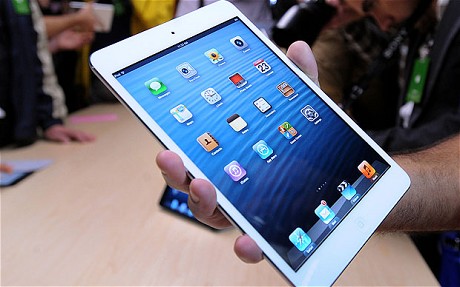
Apple iPad Mini From £269


Apple’s iPad was the best tablet on the market from the moment it launched, thanks to more apps than anyone else, a beautiful screen and an ease of use that was peerless. Then the iPad Mini was launched. Despite Steve Jobs’ own reservations, it turns out that in fact the 8” screen size strikes the perfect balance between ease of use and portability. It feels more natural to integrate the iPad Mini into daily life than any other device – whether it’s checking a quick email, browsing the web or downloading an app, the Mini is an easier gateway. With a 4G version available, too, it’s got excellent connectivity wherever you are. The downside is that the full-size iPad’s screen is bigger and, on balance, the Mini doesn’t offer the best value for money when compared to other tablets. But it does offer the best user experience, at least until Android develops more of the ‘coffee table’ apps that make the iPad such a joy. The thin, lightweight design is unsurpassed.
Screen 7.9” 1024x768 Weight 308g Storage 16/32/64GB OS iOS 6.1Processor 1GHz dualcore

Nexus 7 From £159


A key part of the Nexus 7’s appeal comes from the open Android operating system, effortlessly integrating into Google and into the increasingly popular Android operating system; there are movies, films, books and music galore, as well as all your emails, maps and the rest, elegantly implemented.
But the single biggest plus point for the Nexus 7 is the price: for £159 you get a better screen than the iPad Mini and perfectly decent build quality from Asus. Now that the company has added a 3G option, there’s also permanent connectivity. And while Google Now really comes into its own on a phone, this feature predicts what you want to search for before you even know it (bus times when you get to a bus stop for instance) and also tells you when to leave for your next calendar appointment. Clever and affordable, the Nexus 7 is the best solution for many users.
Screen 7” 1080x800 Weight 340g Storage 8/16GB OS Android 4.1 Jelly Bean Processor 1.2GHz quadcore

Galaxy Note 2


At 5.5”, the Galaxy Note 2 is both a phone and a tablet - hence the ‘phablet’ moniker. But as much of the appeal comes the unique S-Pen technology. This stylus allows you to garner extra information about what’s on the device’s screen simply by hovering above it, and the superfast processor means that this is a device that is as comfortable as a media consumption device as it is as a work unit. For some that means the Note 2 is neither one thing nor the other, but many people still use this it as their main, sole device. It may look like an over-sized phone, but its advantages are considerable. Large screen and impressive capabilities aside, it’s also blazing a new trail.
Screen 5.5” 1280x720 Weight 183g Storage 16/32/64GB, microSD OSAndroid 4.1 Jelly Bean Processor 1.6GHz quadcore

 New iPad From £399


The latest iPad is a beautiful design that works blazingly fast – the new processor may not technically be the fastest, but it feels slicker than any other tablet on the market. With Apple’s ‘Retina display’ the company also has a screen that is, again, not technically the best on the market but somehow looks arguably more lovely. And now that there are 4G options and a 128GB version, you need never run out of storage again. If there’s a criticism of the new version it’s that it changes the dock connector so that your old cables will need replacing, and battery life could be better. But if you’re prepared to spend the money, the iPad remains – and certainly feels – like the best full-size tablet on the market. Web browsing, emails and more never felt so elegant.
Screen 9.7” 2048x1536 Weight 652g Storage 16/32/64/128GB OSiOS6.1 Processor 1.4GHz dualcore

Microsoft Surface From £399


Microsoft’s Surface is the first tablet that the Windows-maker has built itself, and the idea is to show off Windows 8. The latest version of the operating system is built for touchscreens such as the Surface, and indeed this device really does make the operating system make more sense than on a conventional laptop. There are trade-offs, however: Windows 8 is a fully fledged operating system, while the Surface RT only runs a cut down version, called Windows RT. While the Surface Pro runs the full version, it is more expensive, thicker and heavier. So if you want a lovely Windows RT tablet, running the growing but limited selection of Windows 8 apps, then the Surface RT is for you. But who actually wants that? So for now Surface feels like a lovely product with some great ideas, not least the ultra-slim keyboard. But it’s a device in search of a market. The Surface Pro, meanwhile, is more of a laptop replacement, and laptops are lighter and more capable.
Screen 10.6” 1366x768 Weight 681g Storage 32/64GB, microSD OSWindows RT Processor 1.3GHz quadcore

Kindle Fire HD From £159


If you use the internet, you almost certainly use Amazon, and if you read books it’s increasingly certain that you also own a Kindle. The Kindle Fire HD is Amazon’s attempt to move those who already download books into the burgeoning category of those who also download music, film and TV. And while Amazon does indeed let you browse the web or use email on the Fire HD, more than anything else it is a device for browsing the company’s own store and watching media. As such, it’s got a lovely screen, offering a higher resolution than the iPad Mini at a far lower price. And in truth it does everything most people use a tablet of this size for. It’s hard to argue that that’s enough when the Nexus 7 costs the same price and offers a wealth of additional features, such as the entire Android app selection – but where Amazon excels is in making everything simpler, and that for many users is the appeal. Nifty additions such as X-Ray easily let you see whoever is on screen a film, too.
Screen 7” 1280x800 Weight 395g Storage 16/32GB OS Android (adapted) Processor 1.2GHz dualcore

Galaxy Note 10.1 £399


Samsung’s Galaxy Note 10.1 is the company’s most serious attempt to change the face of computing yet – that A4 notepad can, Samsung hope, be replaced by this computerised version, which with the S-Pen you can write notes on, and then later on in the day you can watch films and TV shows too. It’s the ultimate work and play device, the company hopes, and can arguable take on the iPad on all fronts and more. Those are lofty ambitions and for early-adopting technology fans there is a lot to like in the Note 10.1. But it hardly heralds the paperless office yet, because the handwriting recognition isn’t perfect, and it also struggles because the screen isn’t up to the quality of its rivals. With 4G connectivity, however, there’s much to like the Note for – it’s a product for geeks for now, but it heralds at least part of the future. It’s also a super-charged version of the S-Pen-free Galaxy Tab 10.1.
Screen 10.1” 1280x800 Weight 600g Storage 16/32/64/128GB, microSD OS Android 4.1 Jelly Bean Processor 1.4GHz quadcore

Nexus 10 From £319


Like the Nexus 7, Google’s Nexus 10 offers a great tablet at a really great price – unfortunately with the this larger model feels like it doesn’t quite have the class of the Nexus 7. That’s not because the screen isn’t fantastic, or because the build-quality isn’t perfectly decent. Rather it’s because of details, such as the way the case replaces the speaker cover, so you can’t easily remove it, and above all the fact that this good hardware revelas the lack of premium tablet apps for Android. On a screen this nice, there should be more to do than simply read books or watch films. Where the iPad provides that, with apps such as Leonardo Da Vinci’s Anatomy offering a novel experience, the Nexus 10 only reveals that Google has a way to go. But not being as good as the iPad is not a major barrier when the price is this attractive. Indeed, the Nexus 10 is still cheaper than the two-generations-old iPad 2.
Screen 10.1” 2560x1600 Weight 603g Storage 16/32GB OS Android 4.2 Processor 1.7GHz quadcore

iPad 2 From £329


The only real reason not to buy the iPad 2 is that a better one is now available – but with iOS5, decent battery life and a great price, the iPad 2 offers everything that made the original iPad so impressive. That means a huge library of luxurious apps, plus effortless web browsing, decent email and the design that made Apple the leader in its field. At £329, this is by no means the cheapest tablet on the market, but it remains one of the most capable, and it is of course compatible with all the accessories that are built around Apple’s ecosystem. The original connector means your old cables will work, too.
Screen 9.7” 1024x768 Weight 601g Storage 16GB OS iOS5Processor 1GHz dualcore.

 Asus Transformer Prime From £410


Asus make a wide range of tablets, but the Transformer Prime is the one that comes close to being both an excellent tablet and an excellent laptop – with the keyboard acting as a removable charging dock as well as a better way to type than on the touchscreen, as well as packing a powerful processor, this is a device for people who can get most of what they need doing done on a tablet but appreciate the convenience of a laptop. It suffers, however, from the weakenesses of Android as a tablet operating system and the equal lack of apps, and also from the fact that Android is not designed to operate laptops. So its Office software, for instance, is a compromise. But it’s one that works for Asus’s dedicated niche of users.
Screen 10.1” 1280x800 Weight 598g Storage 32GB, SD Card OSAndroid 4.1 Processor 1.3GHz quadcore.

Tuesday, 12 March 2013

Google issues warning over state email spying


Google will warn users if it believes their email account is the target of state-sponsored spying, in a move designed to protect activists, journalists and political figures online.

Users of the web giant’s free Gmail email service have been attacked by hackers believed to be working for the Chinese government, although Beijing angrily denied involvement. Those targeted included democracy activists, the personal email accounts of American and South Korean officials and military personnel.
Now Google will warn such vulnerable users and encourage them to tighten their security settings.
“We are constantly on the lookout for malicious activity on our systems, in particular attempts by third parties to log into users’ accounts unauthorised,” said Eric Grosse, Google’s vice president of security engineering.
“When we have specific intelligence - either directly from users or from our own monitoring efforts - we show clear warning signs and put in place extra roadblocks to thwart these bad actors.”
A new red warning bar will appear at the top of threatened users’ Google accounts.

Authors complain over Amazon's 'anti-competitive' web plans


Authors and publishers have complained about Amazon's growing dominance of the web in a row over the online bookseller's plan to purchase new internet addresses.

The Authors Guild and the Association of American Publishers have both complained about Amazon's request to own new web address suffixes, such as .book, .author and .read.
The Internet Corporation for Assigned Names and Numbers (Icann) is in the process of selling of new top-level domains (TLDs). In addition to web address suffixes such .com and .co.uk, companies can now apply for all kinds of other TLDs, including .app, .home and .art.
Amazon has asked to buy dozens of TLDs, including .pin and .like, but it's the book-related requests that have angered authors and publishers.
In a letter to Icann, Scott Turow, the novelist and president of the Authors Guild, wrote: "We strongly object to ICANN's plans to sell the exclusive top-level domain rights for generic book-industry terms, such as .book, .author, and .read.
"Placing such generic domains in private hands is plainly anticompetitive, allowing already dominant, well-capitalized companies to expand and entrench their market power. The potential for abuse seems limitless."

Google Street View 'shows homes despite privacy requests'


Google has been accused of “sheer arrogance” by security-conscious residents of Carshalton in Surrey after it apparently ignored requests for privacy and published photographs of their homes from its Street View service.

More than half a dozen homeowners in Warnham Court Road asked the web giant not to post images of their properties online after it introduced Street View to Britain in 2009 over fears they could be used by burglars. Google duly removed the photographs.
When Tim Jury, a company director, recently checked on the website, however, he found the Street View car had revisited Warnham Court Road and updated the web with unfettered views of his and neighbours’ homes.
“I think it’s plain wrong,” he said. “We had a leaflet from the police a few days ago saying there had been 13 burglaries in the area and people are worried about security.”
“Google is a technology company; it ought to be easy for them to ensure they keep blurring properties when they update the images.”
Mr Jury was forced to reapply for the image of his house, and that of an elderly neighbour who des not have internet access, to be blurred. He repeatedly asked Google why it had published them despite his earlier request but received no reply

Red October computer virus found


A new computer virus dubbed "Red October", that targets eastern European countries and appeared to be collecting classified files using Nato and EU encryption has been identified.

The primary focus of the campaign was targeting countries in easternEurope, "former USSR Republics and countries in Central Asia, although victims can be found everywhere, including Western Europe and North America", according to Kaspersky Lab, the maker of antivirus software.
Kaspersky Lab said "there is strong technical evidence to indicate the attackers have Russian-speaking origins."
Red October, which has been active since at least 2007, appears to collect files encrypted with software used by several entities from the European Union to Nato, it added.
Kaspersky said Red October also infected smartphones and collected login information to test on other systems.
Red October, which is named after the Russian submarine featured in the Tom Clancy novel The Hunt For Red October, has what Kaspersky Lab called a unique "resurrection" module that hid in Adobe Reader and Microsoft Office programmes that allowed the attackers to regain access if the virus was discovered and removed.

Twitter: how to get more followers


Scientists have produced an academic study that tells Twitter users what they need to do in order to gain more followers.

Researchers at the Georgia Institute of Technology studied data from over 500 Twitter users over a 15-month period.
After studying more than half a million tweets, the conclusion was that “expressing negative sentiments in tweets is the second most harmful factor to growing a Twitter audience.”
In other words, if you want more followers, try not to say mean things. This is certainly not an approach adopted by the comedian Frankie Boyle, who has almost 1.3 million followers.
During the study, the researchers recorded each user’s growth in followers and analysed a link between the size of the increase and the content of the tweets.
Scientists C.J. Hutto, Eric Gilbert and Sarita Yardi called the study the “first longitudinal study of audience growth on Twitter to combine such a diverse set of theory inspired variables,” according to The Poynter Institute.

Twitter kills off TweetDeck apps


Twitter has announced that it is discontinuing three of its TweetDeck apps for iPhone, Android and Air.

Twitter announced in a blog post that the TweetDeck applications would be pulled from the clients' respective app stores in early May and would stop working shortly after that.
Many users choose to access the microblogging site using applications developed by third parties.
The demise of these apps marks an end to the heyday of third-party Twitter clients, a process begun last year when the company tightened its guidelines and "effectively wrestled developers into a choke-hold", according to Readwrite.com.
According to the Twitter blog, the company will be focusing it's efforts on its "modern, web-based versions of TweetDeck". This is unlikely, at least initially, to placate those users who are loyal to the older versions, particularly TweetDeck Air, which has a large following.
The British company TweetDeck was bought by Twitter in 2011 for $40m so the site could gain control of one of the most popular ways of viewing its own content.

'Like' curly fries on Facebook? Then you're clever


‘Like’ curly fries? Then there’s a good chance you’ve got a high IQ, according to a Cambridge University project to discover what we unwittingly reveal about ourselves on Facebook.

The same is true about ‘liking’ thunderstorms, Mozart, and, rather bizarrely, Morgan Freeman’s voice.
But if you like your iPod, you’re probably dissatisfied with life, and if you’re a fan of Terry Pratchett, you’re shy.
A billion people now use the social networking site to keep in touch with family, friends, and passing acquaintances.
One function Facebook has is to denote that you ‘like’ certain things - be that a comment a friend has made, a book, an artist, or a feeling - by clicking on an icon.
But while you may think you are only advertising this facet of your personality to your ‘Facebook friends’, many people’s lax privacy settings mean they are visible to the world.